


The BREAKAWAY is for getting off the wheel. Longer thoughts on cycling, culture, and taste. Less reaction. More distance.
You can follow us on Instagram here but in its purest and most beautiful form this is a newsletter, something to slow your timeline down.
Its 2009 and Norwegian rider named Gabriel Rasch is cold and annoyed. He’s been cutting up an old waterproof vest from his previous team, pinning it tighter against his body and blacking out the logo with a marker so his sponsors won’t see. It’s not elegant. It’s a fix. But it works.
Castelli saw this and instantly made it into a product.
Two years of fabric research with Gore. Twenty-three prototypes. Windstopper X-Lite Plus fabric on the front, NanoFlex on the back. The working title was the Aero Rain Race Jersey. The riders just called it the Gabba, Rasch’s nickname. That stuck.
When it launched commercially in 2011, almost nobody bought it. Then 2013 Milan-San Remo happened. Snow. Rain. Freezing conditions. Half the peloton showed up in Gabbas with rival team logos scribbled out in marker, same as Rasch had done four years before. Riders buying them at shop price, out of their own pocket, because nothing else worked.
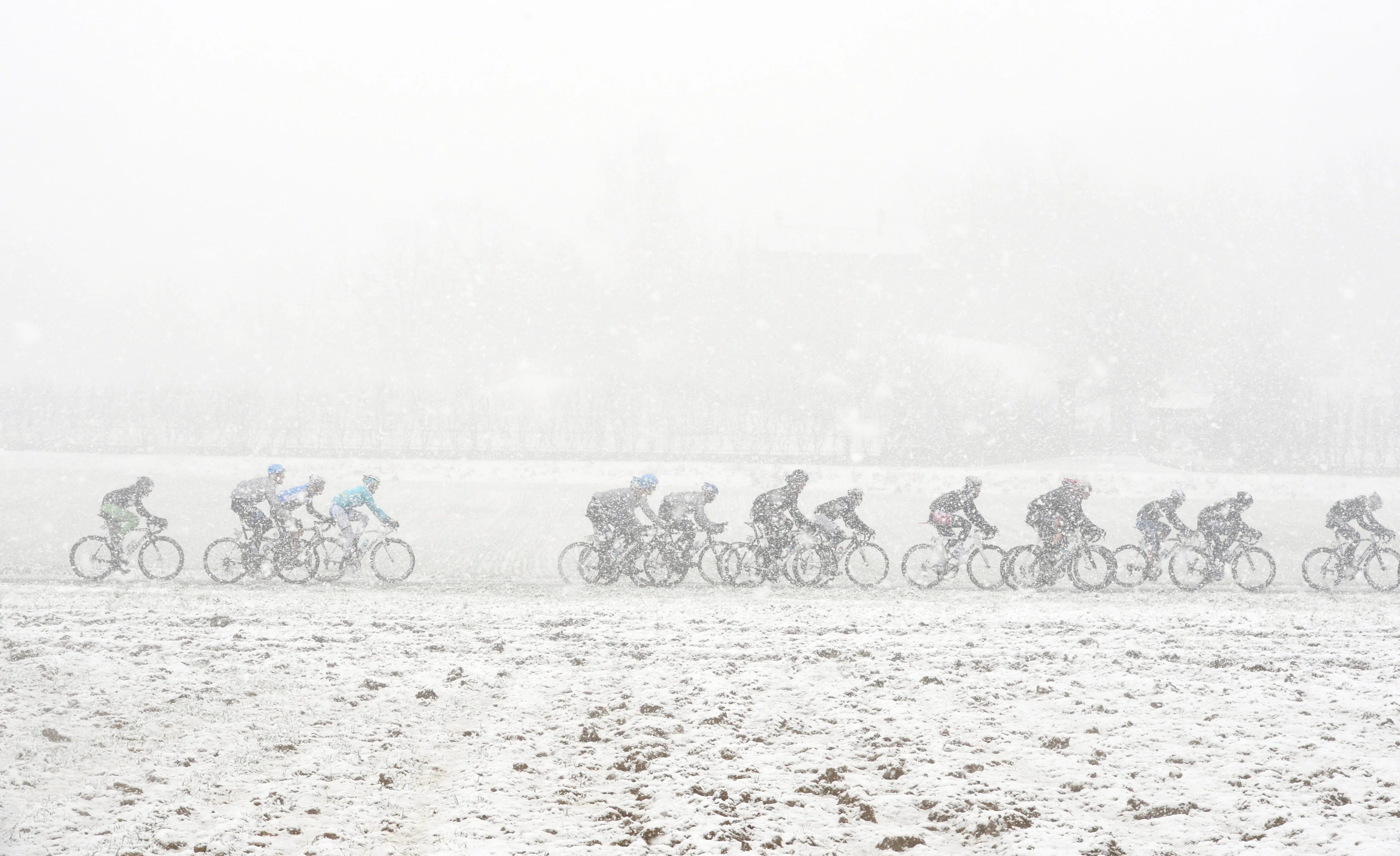
Milan San Remo, 2013.
That’s the only product review that matters.
Nearly 200,000 Gabbas sold since. Castelli invented a category and spent a decade watching everyone else build versions of it. By the time the Gabba R landed in 2024, a complete reinvention faster than a skinsuit in testing, the original had already been infrastructure for fifteen years.
Fifteen years. Think about how many “game-changing” drops have come and gone in that window.
Here’s the thing about that story. It isn’t a fluke and to understand why, you have to go back to 1876.
Milan, Italy. A tailor named Vittore Gianni, long before cycling was a sport anyone cared about, was making clothes that had to hold their shape under real conditions. He dressed institutions. AC Milan and Juventus. The Milan Ballet. Different worlds, same problem: clothes that worked while bodies were in motion.
Castelli didn’t begin as a cycling brand with a mood board and a launch strategy. It began as a maker responding to a specific problem. The bike came later. The mindset didn’t.
By the 1910s, cycling finally entered the picture. Gianni started making kit for professional riders, including Alfredo Binda, five-time Giro champion, during the early race years. No grand pivot. No rebrand. Just the same thinking applied to a new context. Riding exposes weak construction fast. Fit matters once effort stretches past an hour. Fabric matters when conditions turn. Castelli was already living in those details.
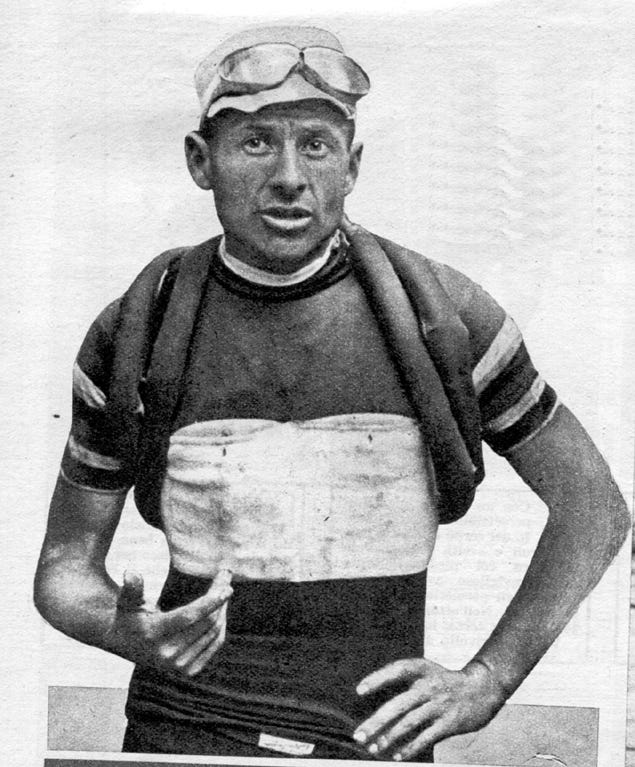
Alfredo Binda
By the 1940s, Castelli kits were on Bartali and Coppi. Races that now feel almost mythic. The brand didn’t muscle its way into those stories. It was just there, doing the work, close to where cycling actually happened.
Then Maurizio Castelli took over in the 1970s and quietly started breaking the status quo.
The Lycra cycling short in 1977. Colored ones in 1981 (at a time when only black was allowed at the Giro). The first windproof jersey, worn by Bernard Hinault to win Flèche Wallonne in 1983. Sublimation printing. The first anatomical seat pad. The first aero race jersey. Each one arrived without fanfare. Each one eventually became so standard that people forgot someone had to invent it first.
Solve it. Move on. Let others catch up. That’s the whole company in a sentence.
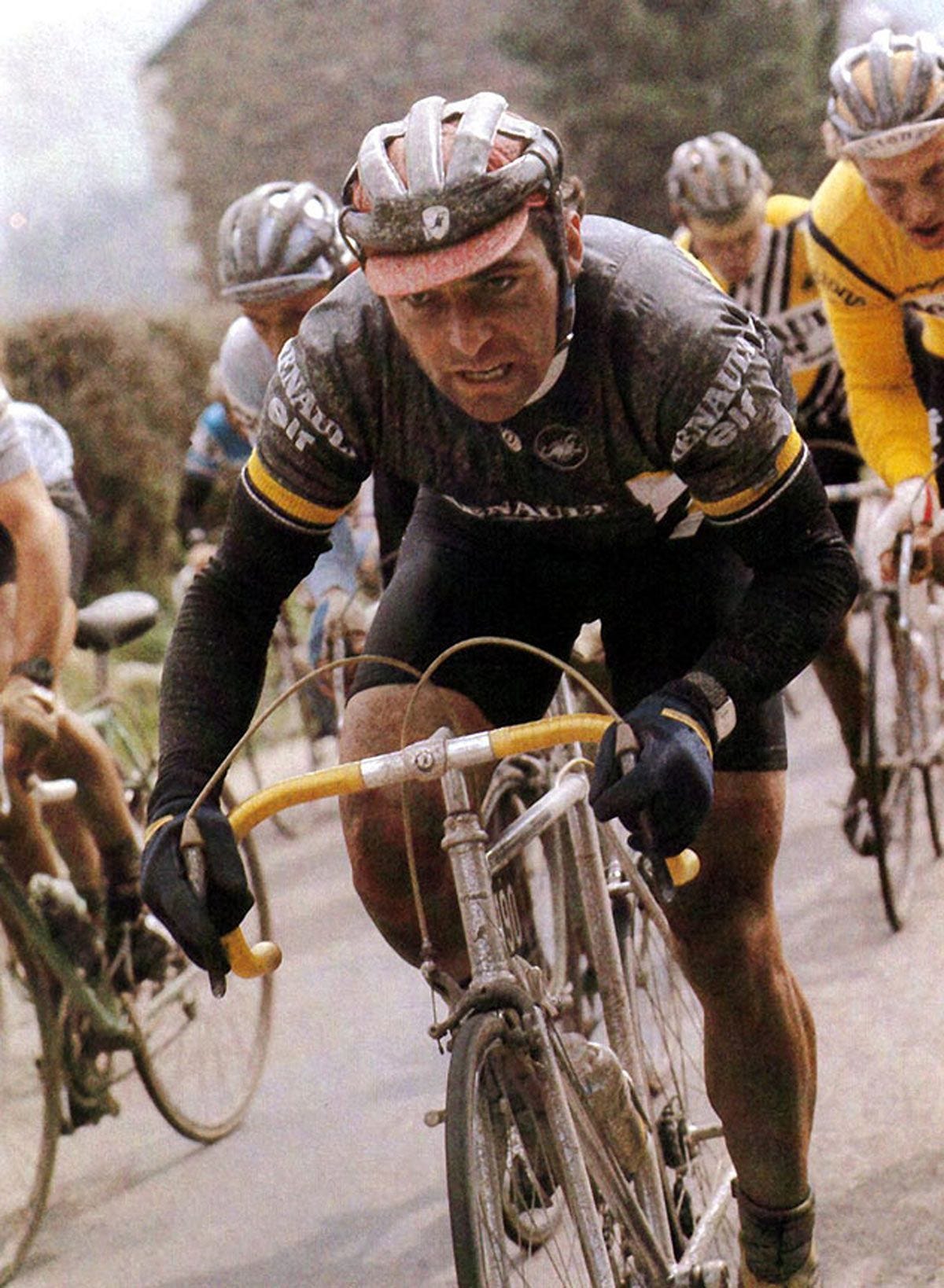
Bernard Hinault, La Fleche Wallone, 1983.
Here’s the thing though, right now, the brands getting the most attention in the cycling kit world are the ones you can see from a distance. Heavy graphics. Loud colourways. Instagram and Strava ready drops.
But there’s a different kind of credibility operating quietly underneath all of that. One that doesn’t ask to be seen. One that’s been there since before any of these brands existed.
Most riders don’t remember the first time they noticed Castelli. It usually happens sideways. A teammate shows up in bibs that seem to last forever. A cold ride forces a decision and Castelli is already on the shelf. The relationship starts without ceremony and continues without much thought. That absence of friction is the whole point.
The brands demanding your attention right now are building identities. Castelli has been building a record. Those are not the same thing. A record doesn’t need a drop. It doesn’t need a collab. It compounds on its own.
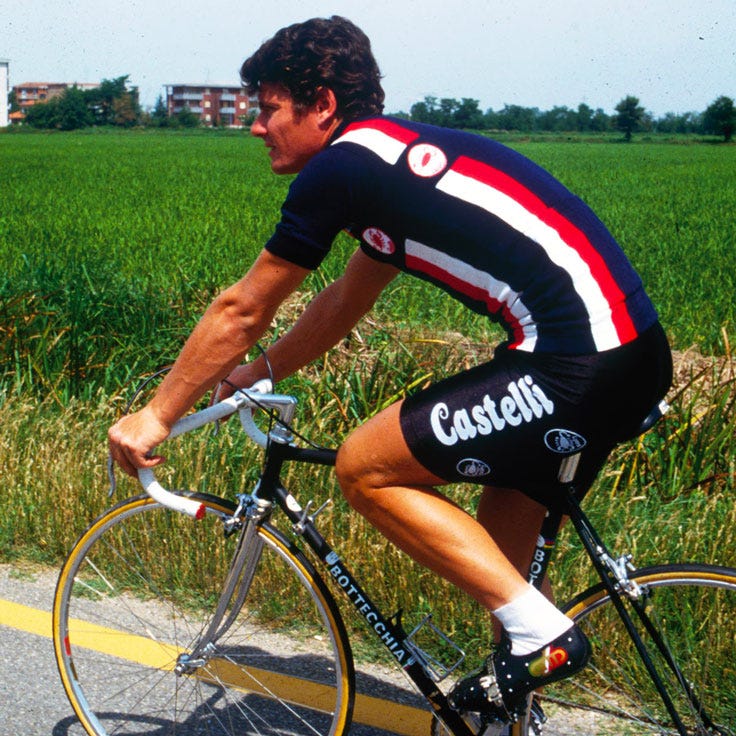
The First Lycra Short, 1977.
There were plenty of moments when leaving would have made sense. Doping scandals gutting the sport’s visibility. Thin margins in a small, technical category. Bigger brands with bigger budgets moving in. Many labels pivoted, diluted, or quietly disappeared. Castelli stayed. Not loudly. Not heroically. Just consistently.
Credibility in cycling doesn’t spike. It accumulates. Season after season, ride after ride. Castelli’s authority doesn’t come from announcements. It comes from being there when it matters. From working in bad weather. From still fitting right four hours in.
The brands getting the clicks right now are visible. Castelli is useful. In cycling, useful compounds. It becomes habit. Habit becomes infrastructure. Infrastructure is harder to dislodge than hype.
A Norwegian rider with a marker figured that out in 2009. The rest of the peloton caught up years later, scribbled logos and all.
To submit a site, product, or whatever you’re working on, email KMC@GRAVITYHILL.CC. We read everything. Posting is never guaranteed, but curiosity always is.