


The BREAKAWAY is for getting off the wheel. Longer thoughts on cycling, culture, and taste. Less reaction. More distance.
You can follow us on Instagram here but in its purest and most beautiful form this is a newsletter, something to slow your timeline down.

Before we get into it
GRAVITYHILL is free to read and always will be. But if you are getting something out of it, a subscription goes a long way toward keeping this independent.
In case you missed it, here is what we have been working on:
BREAKAWAY // 004 — The Kids from Piazza San Babila
Milan, 1983. A generation decided the most radical thing they could do was refuse politics entirely. No manifesto. Just dress better than everyone else. What the Paninari understood about clothes as ideology, and why cyclists have been running the same logic ever since.
LEFT TURNS // 003 — What If Cycling Had a Creative Director?
Crystal Palace did it. Como 1907 did it. The Cleveland Cavaliers did it. Every sport with cultural ambitions figured this out already. What happens when cycling finally makes the call.
Tour riders stopping mid-race to drink wine, eat at cafés, and disappear back into the peloton with glass bottles stuffed in their pockets. The history of la chasse à la canette and what cycling gave up when it decided to grow up.
No affiliate links. No paid placements. No sponsored content. Everything we write about and put in front of you is either something we genuinely believe in or something we believe the culture needs to be talking about. That has always been the deal.
If that sounds like your kind of newsletter, you know what to do.
Ben Healy won a Tour de France stage in July 2025. Wore the yellow jersey for two days. Was written up by NSS Magazine as a fashion icon. Talks about his Issey Miyake trousers in interviews. Posts vacation dumps from Florence and Venice between races that feel like a Dua Lipa feed. Twenty-four years old. Genuinely one of the most interesting athletes in cycling.
He has roughly 105,000 Instagram followers.
Lewis Hamilton has over 40 million. An estimated six figures per sponsored post. When he announced his move to Ferrari, Ferrari’s stock price went up more than 10 percent the same day. Dior. Tommy Hilfiger. Lululemon. Every major fashion house has found its way to him.
The gap between those two numbers is not a talent gap. Not a style gap. Not even a sport gap. It is a visibility gap. And cycling built that gap itself.
We have been thinking about this problem since reading an article over at Bicicletta de Montaigne writing about the UCI’s structural problems (go subscribe). But while Catherine was writing about the financial collapse, we kept coming back to something running parallel to that idea. A conversation about visibility. About why cycling, with all of this great raw material, cannot break through to the audiences that tennis and F1 and basketball have built. About how fashion, whether cycling likes it or not, is one of the most powerful tools any sport has for building cultural presence.
The playbook already exists. It just lives within other sport leagues.
The NBA tunnel walk started as nothing. Players walking from the arena entrance to the locker room before games. Nobody was photographing it. Then in 2005 David Stern introduced a dress code, which backfired in the best possible way. Players who had been wearing whatever they wanted suddenly had rules to push against. LeBron James showed up in Thom Browne. Russell Westbrook wore skirts. The short walk from the door to the locker room became the most watched fifteen seconds in the sport.
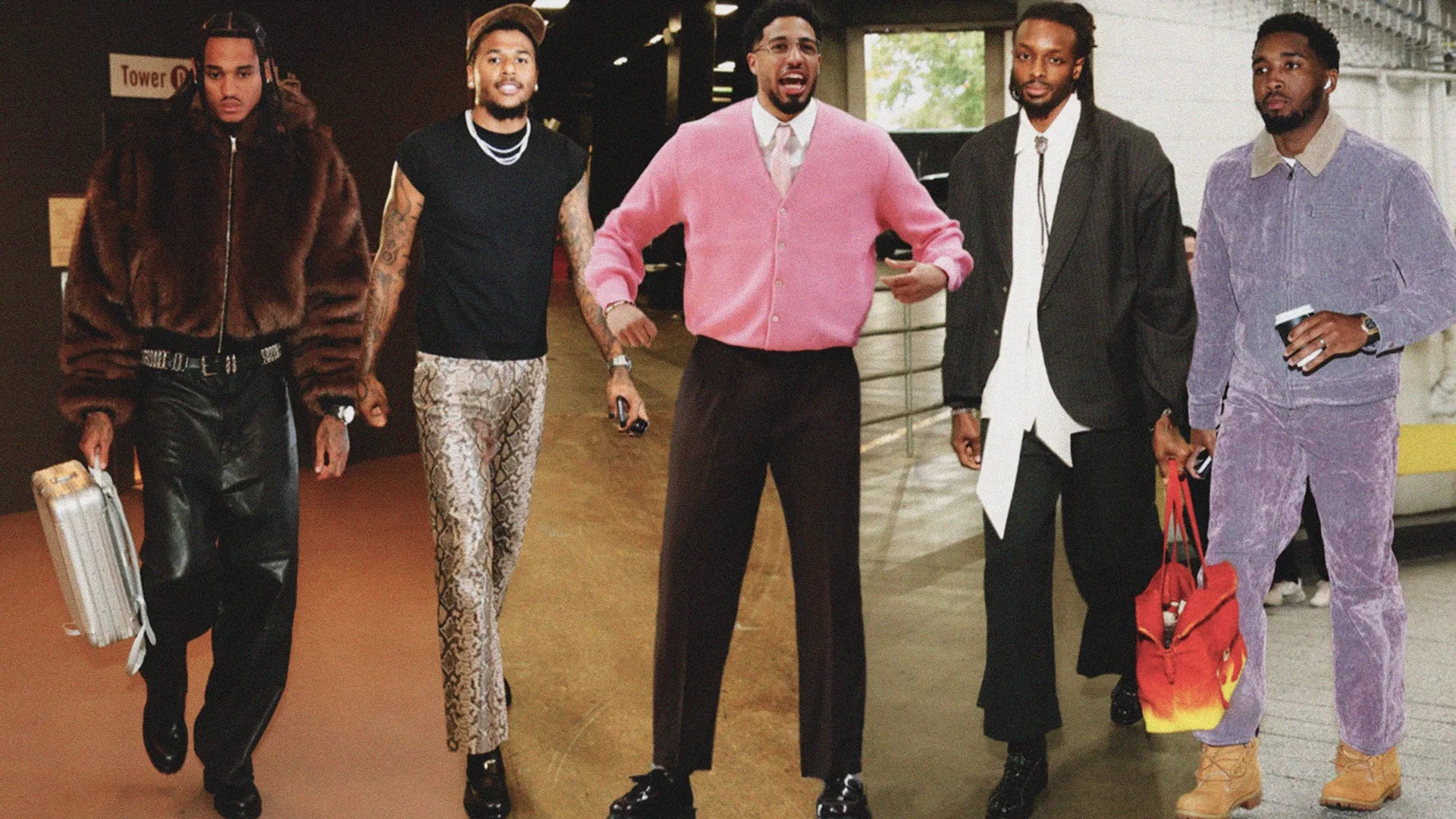
Image via Vogue.com
Ian Pierno started @LeagueFits in 2018, an Instagram account dedicated to documenting NBA tunnel fashion. He struggled to find content at first but today the account has over a million followers. The NBA took notice and started building tunnel content into their own channels. When Kyle Kuzma posted a photo in a $3,000 Rick Owens puffer it sold out within days. When Shai Gilgeous-Alexander wore Fear of God, searches for the brand spiked the following week. The tunnel walk became a product launch platform, a cultural moment, and a new fan acquisition tool all at once.
Pierno said it plainly: if you are a new fan of basketball, maybe the statistics go over your head. But you can relate to the cool outfits. Fashion became the entry point.
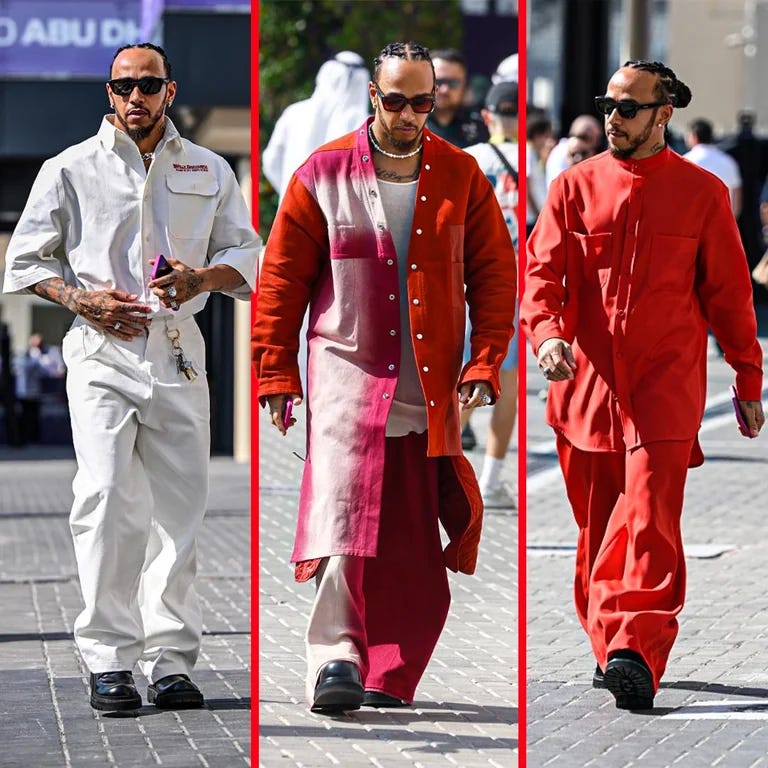
F1 ran a different play with the same result. Hamilton spent a decade turning the paddock into a version of the red carpet. Custom looks for every race weekend. At the 2024 Abu Dhabi Grand Prix his outfits transitioned from a full whitish-silver fit to a full red one over four days to mark his move from Mercedes to Ferrari. He co-chaired the Met Gala. Launched his own streetwear brand. Hamilton did not just become a fashion figure. He became proof of concept that a driver could be a global cultural personality and that personality could pull massive new audiences into the sport. Women now make up around 40 percent of F1’s global audience, up from around 8 percent in 2017. There is a huge surge in North American audiences. That shift did not happen because the cars got faster. It happened because of the imagery around the sport.
Tennis is doing it right now in real time and the ATP is not even pretending it is accidental. They quadrupled their fashion marketing budget. Built ATP Styling Studios, giving players one-on-one sessions with fashion industry professionals. Manufactured tunnel walk moments at Indian Wells this year, photographing Taylor Fritz, Alexander Zverev, and Andrey Rublev walking in like it was a runway. Carlos Alcaraz is with Louis Vuitton. Jannik Sinner carries a custom Gucci bag on court at every tournament. Jack Draper is with Burberry. The ATP looked at the NBA and said we want that.
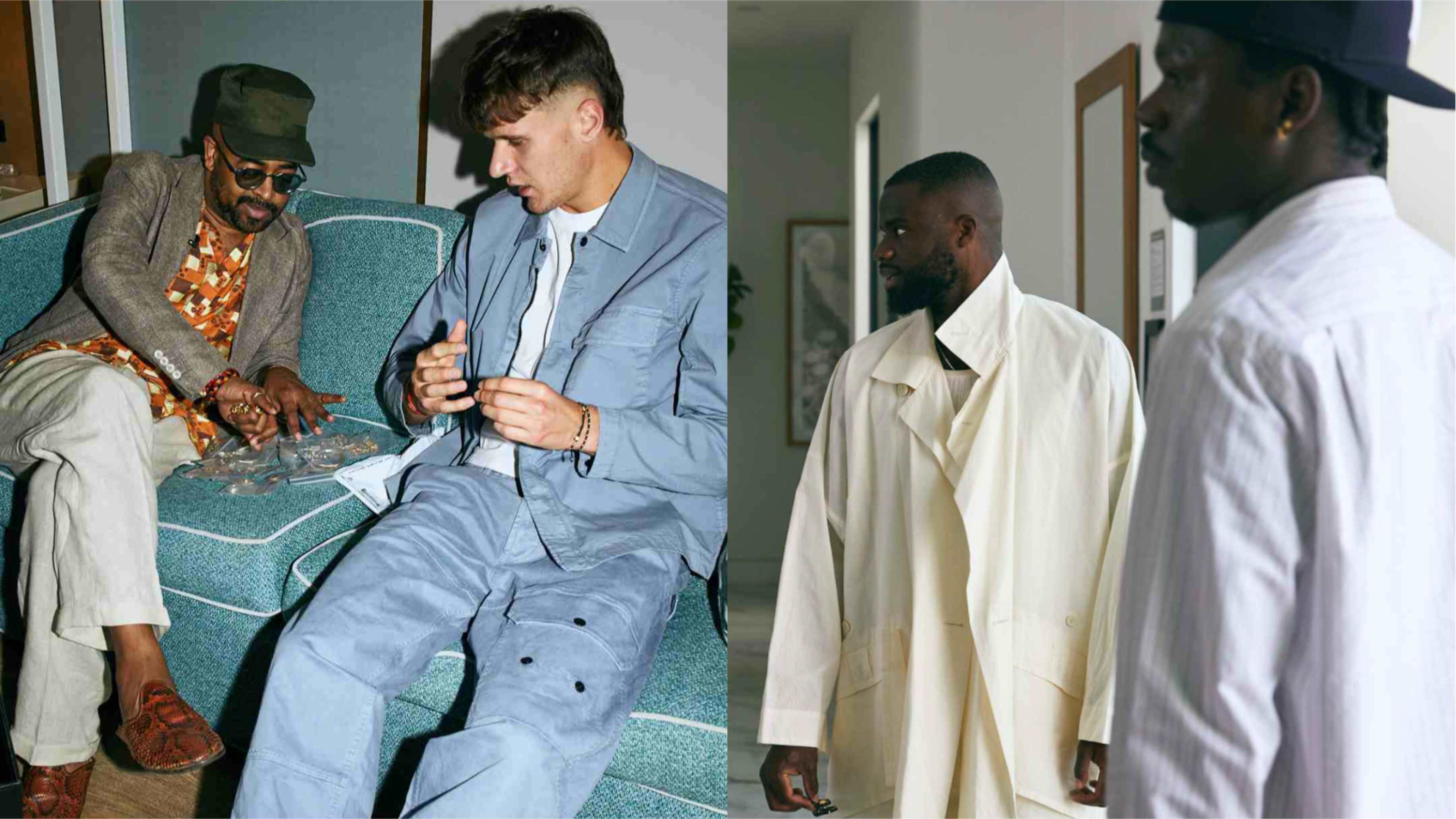
Tennis players worked with former GQ fashion director Mabolaji Dawodu to create custom looks for the Tunnel.
Their SVP of marketing said it out loud: there is a clear intersection between tennis and fashion for our fans. We see this as an opportunity to bring fans who might be following the sport more casually deeper into the fold.
Cycling has not said this yet. Not officially. Not ever actually. Not with a budget behind it.
At the end of an F1 race the drivers emerge from the cockpit looking touched up. At the end of a cycling stage the riders look like they have been through a war. Sunburn, salt stains, road rash, the thousand-yard stare at the finish line. We love that imagery. It makes them look human in a way no other sport does. But that imagery only reaches people who are already watching. It does not travel. It does not pull anyone in from the outside.
New audiences do not enter a sport through its hardest moments. They enter through the ones around it. The tunnel walk. The paddock. The ATP arrivals corridor at Indian Wells. Every sport that has built a real cultural crossover found its door in the same place. Not the competition. The moment before it or after it. What the athlete wears when the helmet comes off. What they look like walking into a hotel lobby in Florence the morning before a stage. Those moments exist in cycling every single week. Nobody is there with a camera. Nobody has a stylist on the phone.
The peloton races through the most photographed cities in the world. Paris. Florence. Milan. San Remo. Liege. Brussels. The backdrops are free and they are extraordinary. The sport produces images that look like they were art directed. A rider in kit climbing a mountain in the Dolomites. The peloton through the Arenberg cobbles in morning mist. The finish line on the Champs-Elysees. No other sport drops its athletes into visual environments like this on a weekly basis. And then those athletes disappear into a team bus and nobody documents what happens next.
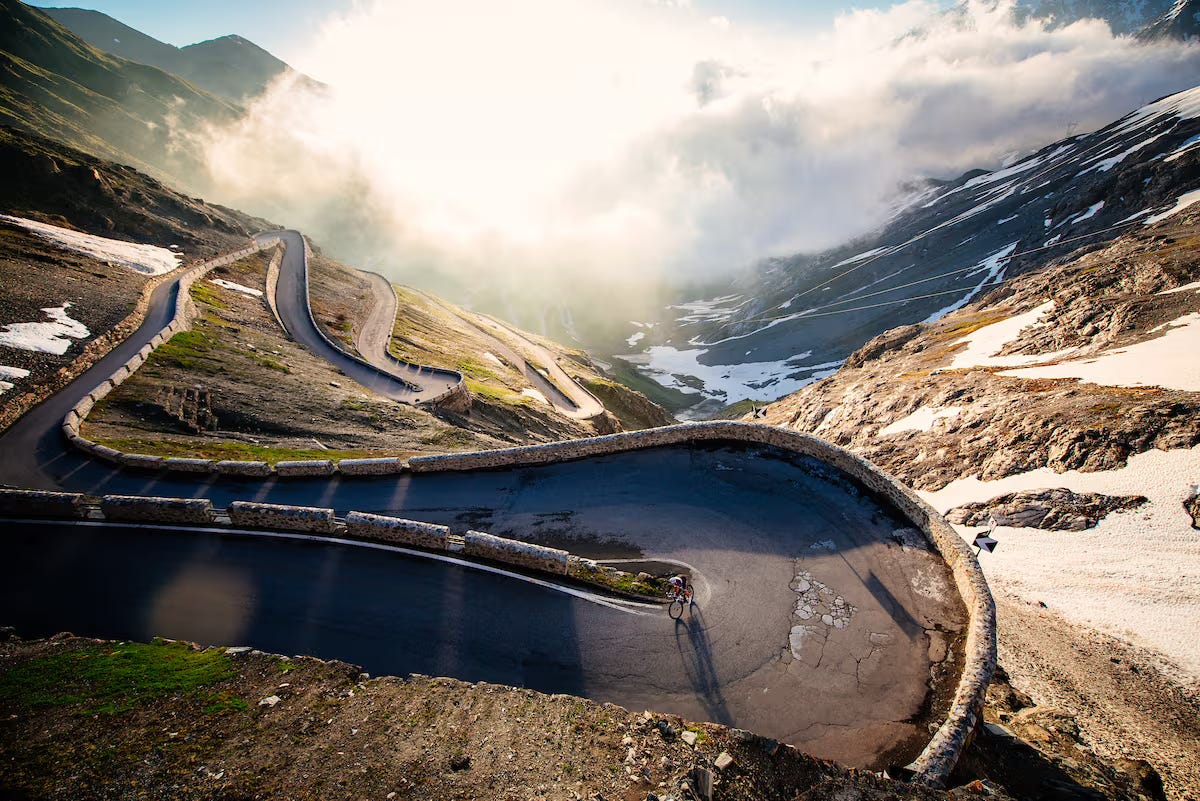
Image from the talented Jared Gruber.
The cycling jersey is already a fashion object. The Molteni orange. The Mapei squares. The Bianchi celeste. Pas Normal Studios, MAAP, Rapha. The crossover is happening from the product side. Brands are doing the work. But a jersey on a hanger in a Copenhagen studio is not the same as Ben Healy wearing Issey Miyake trousers at a café in Florence after a rest day. One is a product. The other is a cultural moment. The difference is a photographer and an intention.
And the raw material is already there.
Michael Matthews has been that guy his entire career. The jewellery. The clothes. The cars. The peloton gave him the nickname Bling before Instagram existed, which tells you everything. This was not a brand exercise. Not a stylist. Not a team social media strategy that decided fashion content performed well. It was just who he was, and the people who rode next to him every day noticed it first. Thirty-four years old now. Grand Tour stages in all three races. Green jersey at the Tour. And 121,000 followers on a platform built for exactly the kind of person he is. The handle is @bling90. The identity was there before anyone thought to document it. It is still waiting.
Mathieu van der Poel is arguably the greatest classics rider alive right now, with the kind of presence that fashion campaigns are built around. He jokes with Pogacar on Instagram after Milan-San Remo. Posts the GOAT emoji under his rival’s victory post. Genuinely a good, funny dude online. Just over a million followers. In any other sport at his level of dominance that number would be 10 million.
Tadej Pogacar is the best cyclist alive (potentially ever). Three Tour de France wins, two Giro d’Italia wins, world champion. 3 million followers. Patrick Mahomes, the best NFL quarterback of his generation, has nearly 7 million on Instagram alone and a multi-decade State Farm deal that runs during the Super Bowl. Pogacar has won more in his sport than Mahomes has in his and has less than half the platform.
A significant portion of the WorldTour peloton lives in Monaco. Pogacar. Michael Matthews. The same square kilometre of the Riviera that houses Formula 1 drivers, tennis players, hedge fund managers, and fashion people. The crossover is not theoretical. It is happening on a Tuesday morning over coffee. Pogacar and Carlos Sainz are neighbours. They ride together on recovery days. Sainz describes it plainly: even on Pogacar's easy days, he is going flat out just to keep up. In March 2026 Sainz drove from Monaco to San Remo to watch Pogacar win Milan-San Remo and was there on the podium to hand him the trophy. The best cyclist in the world and a Formula 1 driver, sharing espressos and a stage finish. Nobody is leaning into that story.
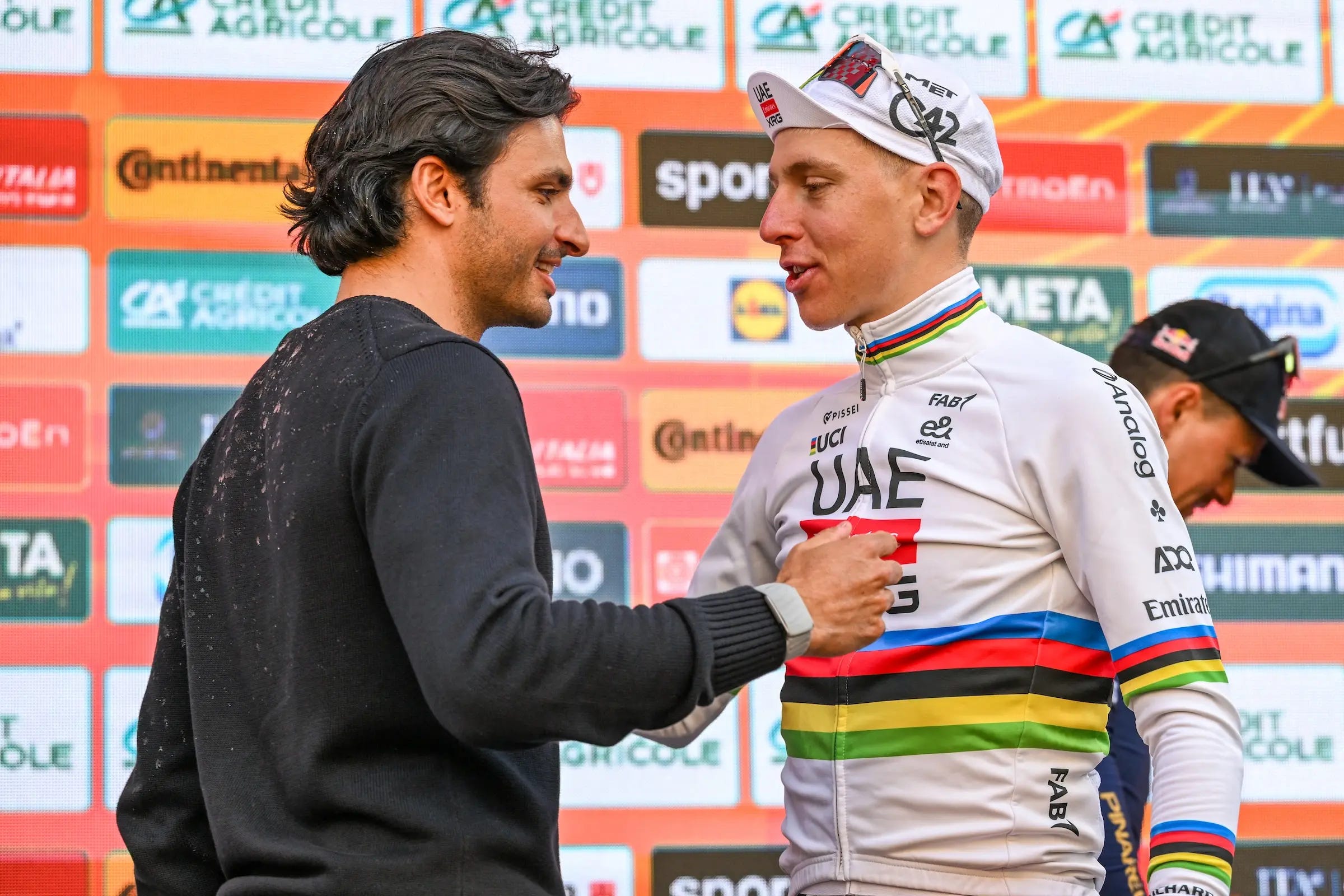
Sainz said it after the race: we are very good friends, and seeing him win the Sanremo here in person, after all he worked for, is a source of pride and honor. He is a top guy. Humble, down to earth. I’d never come to see a race live before. But for him I came.
That is the door. Right there. The elite athlete subculture of Monaco is already integrated. The friendships are real. The shared world is real. The infrastructure to broadcast any of it to the people who would care does not exist.
One rider at the 2025 Tour de France had 1,709 followers. A WorldTour professional competing in the biggest bike race in the world. He told a journalist he might need to crash to get more followers. That sentence should be on a billboard at UCI headquarters.
So why is this happening?
A few reasons.
Cycling has historically treated marketing as an afterthought. Team budgets go to riders, staff, equipment. That’s it. The cultural extension of what their riders represent has not been part of it. Riders spend most of their season in kit or in recovery. The arrival, the hotel lobby, the transfer between races, the post-race cafe stop. These moments happen and disappear. Nobody is photographing them with intent.
The sport has always worn its indifference to image like a badge. Suffering is the point. Looking good is not. Fashion has been treated as peripheral at best, embarrassing at worst. That attitude is the obstacle.
And most importantly: nobody has built the infrastructure. There is no @LeagueFits for cycling. No ATP Styling Studio equivalent. No official channel dedicated to what riders wear when they are not racing. These things do not exist yet. That is not a problem. That is an opportunity.
Here is what fixing this looks like.
Ben Healy does not need to change anything about who he is. He needs a photographer following him for a week during the Tour and a team social media strategy that understands his Issey Miyake trousers are content. The vacation dumps between race days are already the right instinct. They just need to be documented with the same seriousness as the on-bike footage.
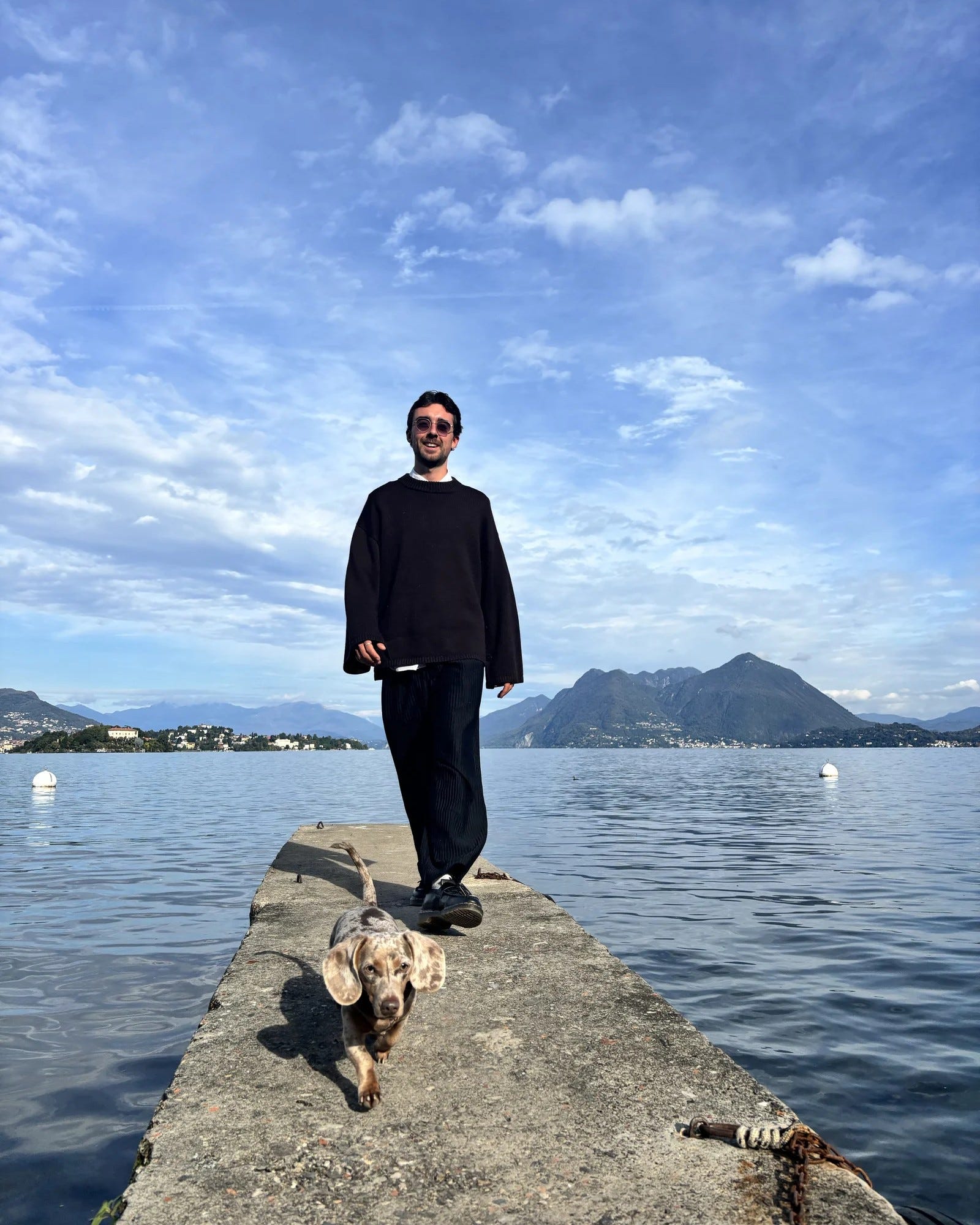
Image via Ben Healy’s insta.
Michael Matthews has an identity built for this. A decade of peloton reputation. You do not invent that. You film it. You follow him through Milan before San Remo and you turn it into a proper editorial shoot alongside the ride content. The raw material is already there. It just needs production.
The proof that the appetite is there already exists. Bas Tietema started a YouTube channel in 2019 with two friends. Three people filming themselves at the Tour de France, handing pizza to riders, messing around on the road. No strategy. No sponsor deck. That channel became the Unibet Rose Rockets, a UCI ProTeam now employing 85 people including a 20-person media team. They have a fanbase called the purple army that shows up at races in purple jackets. At the Amstel Gold Race they filled an entire corner with thousands of supporters. Their most watched video of the season was one where the whole team DNF’d. Not a victory. A failure. Because the fans were so invested in the story that the failure mattered as much as the win. Tietema has said his goal is not just to reach the WorldTour but to build the biggest fanbase in cycling. Nobody else in cycling has made that their primary objective. And they are proving it works.
The women’s peloton has the same problem and an even bigger opportunity. Demi Vollering won Strade Bianche in 2025, finishing alone in the Piazza del Campo in Siena, covered in white dust, every centimetre of that finish photographed by the best cycling photographers alive. 80,000 Instagram followers. Elisa Longo Borghini has won the Giro d’Italia Women two years running, Paris-Roubaix, Tour of Flanders. She is Italian, races in Italy, finishes on roads that look like paintings. 80,000 followers. The visual conditions are perfect. The athletes are extraordinary. The infrastructure to connect those two things to the outside world does not exist. The WNBA built a fashion moment in a single season when the right players arrived and someone decided to document it properly. Women’s cycling has the riders. It is waiting for the same decision.
At the sport level, the UCI and race organisers need to create the conditions. Formal pre-race arrival content. A designated photographer at every Grand Tour start capturing what riders wear off the bike. An official channel dedicated to it. This is not expensive. @LeagueFits was started by one person with a phone. The barrier is not budget. It is intention.
The brands are already paying attention. Richard Mille, Breitling, and Tudor have all moved into cycling in the last three years. Breitling sponsors the Q36.5 Pro Cycling Team. Tudor is the official timekeeper of the Giro d'Italia. In April 2025 IUMAN, the Italian men's underwear brand formerly known as Intimissimi Uomo, signed a deal to put their name on the Maglia Rosa itself. An underwear brand on one of the most coveted jersey in cycling is not an obvious move. It tells you exactly who thinks cycling's audience is worth reaching right now. These are not brands that make uninformed bets. They go where the audience is going. Or more precisely, where they believe the audience is about to go.
The fashion brand side will follow the rest if the infrastructure exists. Sinner did not go looking for Gucci. Gucci went looking for Sinner because the ATP had built the platform that made him visible as a fashion figure. Cycling has riders who are equally compelling. Build the conditions and the brands will come. The brands always follow the audience.
The target is the person who does not yet know they care about cycling. The person who found F1 through Hamilton’s paddock looks. Who started watching the NBA because @LeagueFits showed up on their feed. Who is currently following tennis because Alcaraz looks good carrying a Louis Vuitton bag.
That person exists for cycling too. They just have not been given a door.
Ben Healy in Issey Miyake trousers at a cafe in Florence is the door. Pogacar and Sainz sharing espressos in Monaco and a podium in San Remo is the door. The peloton winding through the streets of Milan on race morning is the door.
The raw material is extraordinary. The sport has just never treated it that way.
To submit a site, product, or whatever you’re working on, email KMC@GRAVITYHILL.CC. We read everything. Posting is never guaranteed, but curiosity always is.
This is so good, I totally agree. Go be the @leaguefits of cycling!
On the womens side, Demi Vollering is sponsored by Charlotte Tilbury so the desire is clearly there. I think there are some issues with how teams - owned by sponsors - allow athletes to have other sponsors, which is key for Demi and I think one of the things that appealed to her about FDJ Suez-United. It will also be key if we want cycling events to have more fashion moments - we need the athletes to be teaming up with fashion brands.
Enjoyed it, a good piece with a different angle of marketing the riders personal side off the bike, but you only need to look at Adam Blythe (ex Lotto Soudal, TNT 🚴 race presenter.
Jake a read 📖 of Joe Laverack’s excellent article which also covers some of the marketing gaps cycling is missing and own goaling on!
https://joelaverick.substack.com/p/the-peloton-economy?r=1wabb9&utm_medium=ios